
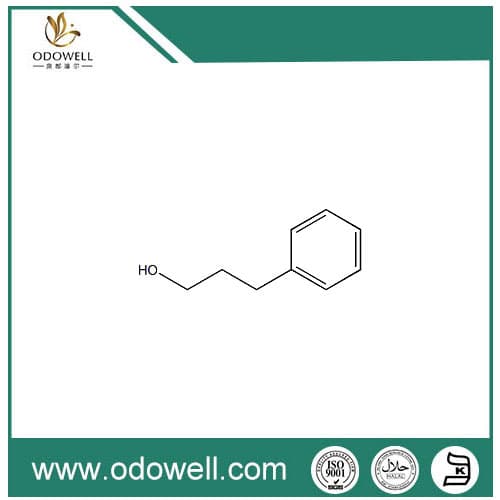
3-Phenyl-1-Propanol
3-Phenyl-1-propanol's cas code is 122-97-4
3-Phenyl-1-Propanol, Suppliers, Wholesale, In Stock, Free Sample, China, Manufacturers, Made in China, Low Price, Quality, 1 Year Warranty
Product Description
3-Phenyl-1-propanol Basic information
Chemical properties Uses content analysis toxicity Security utilization limitation Production Method Standard for Maximum Allowable Amount
Product Name: | 3-Phenyl-1-propanol |
Synonyms: | Benzene-1-propanol;Benzenepropyl alcohol;γ-Phenylpropyl alchol;3-phenyl-1-propylalcohol (PPA);3-Phenyl-1-propanol, 98% 250GR;Hydrocinnamyl Alcohol 3-Phenylpropyl Alcohol;FEMA 2885;GAMMA-PHENYLPROPYL ALCOHOL |
CAS: | 122-97-4 |
MF: | C9H12O |
MW: | 136.19 |
EINECS: | 204-587-6 |
Product Categories: | |
Mol File: | 122-97-4.mol |
3-Phenyl-1-propanol Chemical Properties
Melting point | −18 °C(lit.) |
Boiling point | 119-121 °C12 mm Hg(lit.) |
density | 1.001 g/mL at 20 °C(lit.) |
FEMA | 2885 | 3-PHENYL-1-PROPANOL |
refractive index | n20/D 1.526(lit.) |
Fp | 229 °F |
storage temp. | Store below +30°C. |
solubility | 0.1g/l insoluble |
pka | 15.04±0.10(Predicted) |
form | Liquid |
color | Clear colorless |
Water Solubility | 10.3 g/L (20 ºC) |
JECFA Number | 636 |
BRN | 1857542 |
CAS DataBase Reference | 122-97-4(CAS DataBase Reference) |
NIST Chemistry Reference | 3-Phenylpropanol(122-97-4) |
EPA Substance Registry System | Benzenepropanol (122-97-4) |
3-Phenyl-1-propanol Safety Information
Hazard Codes | Xi |
Risk Statements | 36/37/38-36/38-R36/38 |
Safety Statements | 26-37/39-S37/39-S26 |
WGK Germany | 1 |
RTECS | UB8970000 |
TSCA | Yes |
HS Code | 29062900 |
3-Phenyl-1-propanol Usage And Synthesis
Chemical properties | Colorless viscous liquid with a sweet scent of flowers and sweetmeat and the flavor of fresh fruit after dilution. Its boiling point is at 236 °C, flash point at 109 °C. Soluble in ethanol, propylene glycol and most of the non-volatile oil, insoluble in glycerol and mineral oil, slightly soluble in water (1: 300). |
Uses | (1) Temporarily allowed as food flavouring agent in GB 2760-1996. Mainly used in the preparation of essence of peach, apricot, plum, watermelon, strawberry and nuts like walnut and hazel. |
content analysis | Total alcohol method (OT-5)Sample amount : l g, Equivalent Factor (f) = 68.10. |
toxicity | GRAS(FEMA). |
Security utilization limitation | FEMA(mg/kg):0.73 in soft drinks;1.4 in cold drink;2.8 in sweets;3.3 in baked food;4.3 in gum confection;5.0 in liquor. WHO Class II /moderate toxicity |
Production Method | (1) the catalytic hydrogenation of ethyl cinnamate. |
Standard for Maximum Allowable Amount | food additives: phenylpropanol |
Chemical Properties | CLEAR COLOURLESS LIQUID |
Chemical Properties | 3-Phenyl-1-propanol occurs both in free and esterified forms in resins and balsams (e.g., benzoe resin and Peru balsam). It has been identified in fruits and cinnamon. |
Chemical Properties | 3-Phenyl-1-propanal has a characteristic sweet, hyacinth-mignonette odor. It has a sweet and pungent taste suggestive of apricot. |
Occurrence | Reported found in storax, Sumatra benzoin, tea, Peru balsam, passion fruit, strawberry, bilberry, high bush blueberry, European cranberry, guava peel, fresh blackberry, heated blackberry, rum, white wine, shitake, matsutake, peated malt, loquat, sapodilla fruit and crownberry. |
Preparation | By hydrogenation of either cinnamic aldehyde or cinnamic alcohol. |
Taste threshold values | Taste characteristics at 20 ppm: spicy, cinnamon, balsamic, fruity, winy and honey-like with floral nuances. |
3-Phenyl-1-propanol Preparation Products And Raw materials
Preparation Products | Phenprobamate-->3-PHENYLPROPYL ACETATE |
Raw materials | trans-Cinnamaldehyde-->CINNAMIC ALCOHOL-->Ethyl cinnamate |