
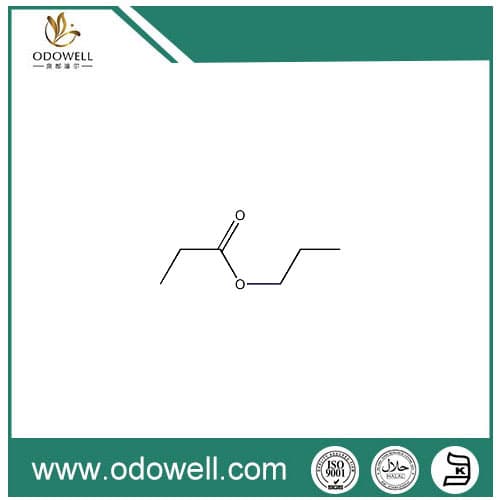
Propyl Propionate
Propyl propionate's cas code is 106-36-5
Propyl Propionate, Suppliers, Wholesale, In Stock, Free Sample, China, Manufacturers, Made in China, Low Price, Quality, 1 Year Warranty
Product Description
Propyl propionate Basic information
Product Name: | Propyl propionate |
CAS: | 106-36-5 |
MF: | C6H12O2 |
MW: | 116.16 |
EINECS: | 203-389-7 |
Mol File: | 106-36-5.mol |
Propyl propionate Chemical Properties
Melting point | −76 °C(lit.) |
Boiling point | 122-124 °C(lit.) |
density | 0.881 g/mL at 25 °C(lit.) |
vapor density | 4 (vs air) |
FEMA | 2958 | PROPYL PROPIONATE |
refractive index | n20/D 1.393(lit.) |
Fp | 76 °F |
storage temp. | Flammables area |
solubility | 5g/l |
form | Liquid |
color | Clear colorless |
Specific Gravity | 0.882 (20/4℃) |
Odor Threshold | 0.058ppm |
explosive limit | 1.3%(V) |
Water Solubility | Soluble in water. (5g/L). |
JECFA Number | 142 |
Merck | 14,7867 |
BRN | 1699993 |
CAS DataBase Reference | 106-36-5(CAS DataBase Reference) |
NIST Chemistry Reference | Propanoic acid, propyl ester(106-36-5) |
EPA Substance Registry System | Propanoic acid, propyl ester (106-36-5) |
Propyl propionate Safety Information
Hazard Codes | Xn |
Risk Statements | 10-20-2017/10/20 |
Safety Statements | 24 |
RIDADR | UN 3272 3/PG 2 |
WGK Germany | 1 |
RTECS | UF7100000 |
TSCA | Yes |
HazardClass | 3 |
PackingGroup | II |
HS Code | 29155090 |
Propyl propionate Usage And Synthesis
Chemical Properties | Clear colorless liquid |
Chemical Properties | Propyl propionate has a complex, fruity odor reminiscent of apple, banana and pineapple. It has a somewhat pleasant, bitter flavor. |
Uses | Solvent for nitrocellulose, paints, varnishes, lac- quers, coating agents. |
Preparation | By esterification of propyl alcohol with the corresponding acid in the presence of concentrated H2SO4, or in the presence of BF3. |
Aroma threshold values | Detection: 57 ppb |
Taste threshold values | Taste characteristics at 20 ppm: sweet, lift, tropical green, fruity notes. |
Purification Methods | Treat the ester with anhydrous CuSO4, then distil it under nitrogen. [Beilstein 2 IV 707.] |